Textiles & Bedding
Inside Coyuchi’s Organic Linen Duvet Covers: Construction, Comfort, and Care
A linen duvet cover is more than a decorative layer. Its fiber, weave, finish, and fastening system shape how it feels against the skin, how it behaves through the night, and how it changes after years of washing. Coyuchi’s organic linen designs bring those details into focus.
The character begins with flax
Linen starts as a plant, not a thread count. It is made from the bast fibers of flax, which are separated from the plant’s stalk and prepared for spinning. Once woven, these fibers create a textile with a distinct surface: gently irregular, naturally textured, and different from the smooth uniformity associated with many cotton fabrics. That variation is part of linen’s appeal. It gives a duvet cover a quiet, lived-in presence even when the bed is carefully made.
In Coyuchi’s Organic Relaxed Linen Duvet Cover, the stated material is 100% organic French linen. The flax is grown in France, then woven into linen in Portugal. Those locations describe separate steps in the textile’s journey: cultivation supplies the raw fiber, while weaving turns prepared yarn into cloth. Understanding the distinction helps make sense of a product’s origin without implying that every stage takes place in one country.
The collection information identifies the linen as GOTS certified. Certification can help consumers evaluate claims about organic fiber and the processing requirements covered by a particular standard. It is useful context, but it is not a substitute for reading the full scope of a certification or treating a single label as a complete account of a textile’s environmental impact. Fiber origin, processing, durability, laundering, and how long an item remains in use all matter to the broader picture.
Flax itself has a place in crop rotations, and product information for related organic linen pieces describes a seven-year rotation that includes other crops. Rotation can diversify what is grown in a field over time. It is one part of agricultural practice, not a standalone guarantee of sustainability. The most reliable approach is to consider specific, documented details rather than assuming that a natural fiber is automatically impact-free.
Why linen feels different
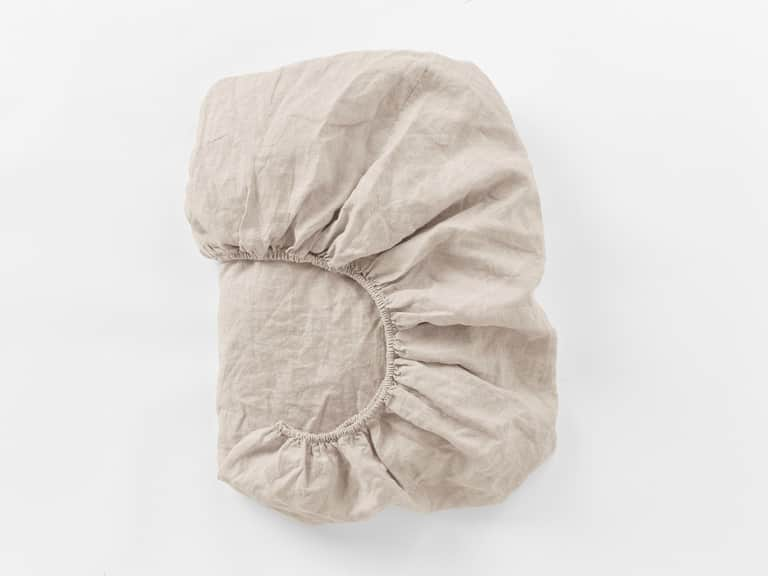
Linen’s appeal is tactile before it is theoretical. The cloth has a recognizable grain and a soft, dry hand that is not quite like cotton sateen or crisp percale. In a relaxed finish, the surface carries visible creases and variations. It is not designed to look perfectly pressed at every hour of the day; its ease is part of the design.
Its structure also makes linen a natural choice for bedding. Air can move through woven fabric, and the fiber can take up moisture. Those properties contribute to a comfortable sleep surface, especially for people who dislike a heavy, close-feeling layer. They do not mean that linen independently controls body temperature or guarantees cool sleep. Room temperature, duvet fill, personal comfort, and the weave and weight of the fabric all play a role.
That balance is why linen is often described as suitable across seasons. A cover can feel breathable in warmer weather while still serving as a useful outer layer when the room is cooler. The effect depends on the bedding beneath it: a light insert and a heavyweight one will produce very different results. Linen is one part of a sleep system, not a substitute for choosing an appropriate duvet insert.
New linen can feel more substantial or crisp than linen that has been washed and used repeatedly. With regular laundering, the fabric may become more supple. That softening is gradual, and it does not mean the cloth loses its distinctive texture. Rather, the surface relaxes while the natural character remains. For anyone expecting a slick, smooth finish straight from the package, this is worth knowing in advance.
Construction details that matter at bedtime
A duvet cover has two jobs: it protects the insert and creates the surface that touches the sleeper. Its design details can seem small in a product description, but they influence how easily the cover is used and whether the insert stays in place.
The weave and the relaxed finish
Weaving interlaces yarns to form cloth. In linen, natural variation in the flax yarn contributes to the finished surface, while the weave determines how the threads meet and how the fabric drapes. A relaxed or washed finish gives the cover a softer, less formal appearance. Coyuchi’s product details describe its organic linen as having a relaxed feel that softens with use. The result is bedding that can look composed without requiring a perfectly pressed finish.
Descriptions such as “soft,” “breathable,” and “durable” are useful starting points, but they are not precise measurements. Two linen fabrics can feel different because of yarn, weave, finishing, and fabric weight. If choosing in person, touch and drape may be the most informative evidence. When shopping remotely, look for clearly stated fiber content, origin, construction, care directions, and the practical details of the closure.
An interior flap
The described duvet cover includes an eight-inch interior flap. This extra fabric folds over the opening and helps create a neat finish around the insert. A flap can also reduce the chance that the duvet’s edge will sit directly against the opening. It is a simple construction feature, but one that can make the cover feel more considered in daily use.
Coconut shell buttons
Coconut shell buttons provide the stated closure for the cover. Buttons allow the opening to be secured while keeping the fastening integrated into the textile. Their natural material offers a different look from plastic hardware, although the fastening’s performance ultimately depends on sound attachment and careful use. When changing the cover, unfasten the buttons rather than pulling fabric away from them; stress at the buttonhole or seam can gradually weaken the area.
Inside ties
Inside ties connect the cover to corresponding loops on a compatible duvet insert. Their purpose is practical: they help limit shifting and bunching while the bed is in use. To secure the insert, turn the cover inside out, fasten each tie to its matching loop, and then turn the cover right-side out. If an insert does not have matching loops, the ties may not be usable without an alternative fastening method.
These details work together. The interior flap finishes the opening, buttons secure it, and ties help hold the insert in position. None eliminates all movement, but each addresses a different everyday annoyance. A well-made cover is not only a rectangle of cloth; it is a piece of textile engineering designed to be removed, washed, and put back into service repeatedly.
Comfort is a relationship, not a promise
When evaluating linen bedding, “comfort” is best understood as a combination of sensation and circumstance. Linen’s surface is textured rather than glassy. Its breathability may suit people who prefer airier bedding, while its weight and feel can appeal to those who want a natural layer with more presence than a very lightweight sheet. Preferences differ, and a fiber’s reputation cannot predict every sleeper’s experience.
The cover also interacts with the insert. A down, wool, cotton, or synthetic fill can each change the warmth, weight, and drape of a finished duvet. The fabric does not determine the entire thermal experience. In a warm room, a thick insert may feel too insulating regardless of the cover material; in a cool room, a light insert may not provide enough warmth. Consider the whole bed rather than judging the cover in isolation.
Texture is another personal choice. Linen’s natural creasing is often welcomed as evidence of an unforced, relaxed style. Those who prefer a smooth, crisp, highly uniform bed may be more satisfied with a different weave or fiber. Linen can be ironed if desired, but its everyday character does not depend on removing every crease. The point is not that one look is superior; it is that linen has a recognizable visual language.
Over time, use becomes part of the fabric’s story. Repeated washing can soften the hand, while the weave continues to show the irregularities that distinguish linen. That evolution is one reason people choose it: it can feel less precious as it becomes familiar. A duvet cover intended for regular use should be judged not only by its first impression but also by whether its care routine and texture suit the household.
A careful approach to linen care
The care directions supplied for Coyuchi’s organic linen duvet cover call for a cold wash on a gentle cycle, washing with like colors, and low-heat tumble drying. The cover should be removed promptly after drying; a warm iron is optional. These instructions are the best starting point for routine care because they are specific to the product rather than a universal rule for every linen textile.
- Check the care label first. Follow the instructions attached to the individual cover, especially if they differ from general linen advice.
- Wash with similar colors. Separating pale and dark textiles helps reduce the chance of unwanted color transfer.
- Choose a gentle cycle and cold water. A less aggressive wash can reduce unnecessary wear on fibers, seams, buttons, and ties.
- Use detergent thoughtfully. Measure according to the detergent directions and avoid bleach or whitening products unless the care instructions specifically permit them.
- Dry on low and remove promptly. Lower heat helps avoid the stress of excessive drying, while prompt removal can make creases easier to manage.
- Iron only if you want to. A warm iron is listed as an option, not a requirement. A relaxed linen surface is designed to look at home with some natural texture.
Before washing, close the buttons and check that ties are untangled. Washing the cover with like colors and avoiding an overloaded machine gives it room to move. If the duvet cover is very large relative to the washer, a larger-capacity machine may be more suitable. The fabric should not be forced into a drum that cannot circulate water and rinse it properly.
Low-heat drying offers a practical middle ground between convenience and restraint. If air-drying is preferred, follow the care label and make sure the cover can dry fully. Damp textiles left folded for too long can develop an unpleasant smell. A cover should be completely dry before it is put back on the bed or stored.
Small repairs can extend useful life. If a button loosens, a seam begins to open, or a tie detaches, mending the issue early may prevent a minor problem from becoming a larger tear. Inspecting closures when changing bedding takes only a moment and can help preserve the cover’s function as well as its appearance.
How to choose the right cover
Start with fit. Match the duvet cover dimensions to the insert, allowing for the way both are intended to drape. A cover that is much larger can leave the insert shifting inside; one that is too small can compress the fill and strain the seams. Check the product’s size chart and compare it with the insert’s measurements before ordering.
Next, consider the fastening system. Buttons and internal ties are helpful only when they suit the owner’s preferences and the insert’s construction. People who change covers frequently may value an opening that is straightforward to use, while those who dislike shifting may pay particular attention to the tie arrangement. Button placement and the ease of reaching them matter in ordinary household use.
Then think about fabric character. A relaxed linen cover has a visible texture and a naturally creased look. If that is the atmosphere you want, it can be a strong choice for a calm, layered bedroom. If you want an immaculate, pressed surface with minimal texture, linen may demand more ironing than you would like—or simply not match your preferred aesthetic.
Finally, read claims in context. “Organic,” “breathable,” and “durable” describe qualities that matter, but the details behind them matter too. Check fiber composition, certification information, where the flax was grown and the linen woven, and how the item should be cared for. A clear product description makes it easier to compare options without relying on broad promises.
The long view of linen bedding
A duvet cover earns its place through use. It is handled during weekly changes, washed repeatedly, and asked to protect an insert while staying comfortable night after night. Linen’s appeal lies partly in that everyday role: the fiber has texture and character, while the relaxed finish is meant to accommodate ordinary living rather than conceal it.
For Coyuchi’s organic linen covers, the construction story is specific: French-grown flax, linen woven in Portugal, an eight-inch interior flap, coconut shell buttons, and inside ties. The care guidance is equally practical: cold, gentle washing and low-heat drying, with ironing left to preference. Taken together, those details describe a textile designed to balance natural texture with useful function.
Choosing linen is not a promise of perfect sleep or effortless care. It is a decision in favor of a particular material, feel, and way of making a bed. The cloth may soften, the creases may remain, and the ties may still need adjusting after a restless night. That modest realism is part of linen’s appeal: comfort is not manufactured as a flawless surface, but built from fiber, construction, maintenance, and the habits of the people who use it.
Frequently asked questions
Does linen bedding work in every season?
Linen is often valued for breathability and moisture handling, which can make it comfortable across changing conditions. The duvet insert, room temperature, and individual preferences still determine how warm the bed feels.
Will a linen duvet cover become softer?
Linen commonly softens with use and washing. The relaxed texture remains part of its character, so softening does not mean the surface becomes perfectly smooth or wrinkle-free.
What do the inside ties do?
They attach to compatible loops on the duvet insert and help reduce movement inside the cover. They are most useful when the insert has matching loops in the appropriate locations.
Does linen need to be ironed?
No. The product care information lists warm ironing as optional. Linen’s natural creasing is part of its relaxed appearance, though ironing can be used when a smoother finish is preferred.