Textiles & Everyday Living
How Libeco’s Woven Throws Balance Texture, Warmth, and Everyday Use
A well-made throw does more than add a little warmth. Its fibers influence how it feels against the skin; its weave determines how it hangs, breathes, and wears; and its finishing details can turn a useful layer into a quietly distinctive part of a room.
Published November 16, 2026
A throw earns its place through use. It is pulled over the knees on a cool evening, folded at the foot of a bed, or draped across the arm of a chair between one season and the next. Its appeal is immediate, but its lasting value rests on less obvious decisions: what fibers went into it, how those fibers were woven, how the edges were finished, and whether its care requirements suit real life.
Libeco’s woven textiles offer a useful lens through which to consider those choices. Linen, wool, and blends of the two can create very different surfaces and levels of warmth. A washed finish may soften the first impression of linen; fringe gives an edge movement; a stripe can make the weave legible from across a room. These are not merely decorative effects. They shape how a textile feels, behaves, and fits into everyday routines.
Understanding those relationships helps separate a throw that looks inviting from one that will be used often. It also makes comparison more meaningful. Instead of relying on broad descriptions such as “soft,” “cozy,” or “lightweight,” consider the material composition, fabric weight, weave, construction, and stated care instructions together.
Start with the fibers
Linen begins with flax. In a finished textile, linen is valued for its distinctive dry hand, natural texture, and ability to let air circulate through the fabric. A linen throw can therefore feel substantial without behaving like a dense, heat-trapping layer. Its surface may be crisp or relaxed depending on the yarn, weave, and finish, and its irregularities can lend a sense of depth that smooth, uniform cloth does not have.
Wool contributes a different set of qualities. It can add insulation, spring, and a fuller hand. In a blend, it may temper linen’s crispness and make the cloth feel more enveloping, while linen can lend structure and a less uniformly plush surface. The result depends on the proportions and construction: the phrase “linen and wool” describes a family of possibilities, not one predictable texture or degree of warmth.
That distinction matters when considering textile blends. A throw containing mostly linen may drape and feel unlike one with a larger share of wool. Fiber percentages are a practical starting point, but not a complete forecast. Yarn thickness, weave density, finishing, and the size of the textile also affect how it performs. Where the composition is stated, read it as a useful guide—not as a substitute for examining the rest of the specification.
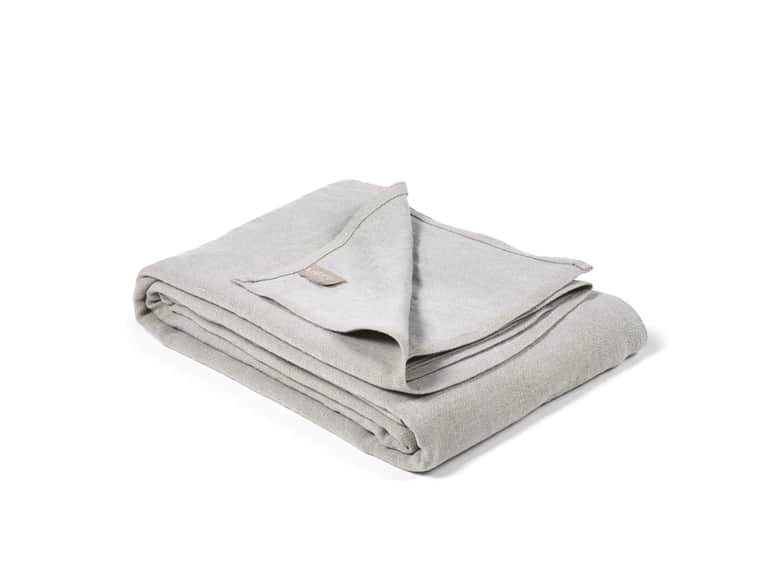
For a single-fiber comparison, Libeco’s Hudson Blanket is described as 100 percent linen, woven in Europe from European flax and stonewashed for a softened, lived-in hand. It is a blanket rather than a throw, but its material and finishing illustrate a relevant principle: linen can feel relaxed and refined while retaining a breathable character. The description also identifies its European field-to-fabric sourcing, a provenance detail that helps clarify where the material comes from.
Weave gives texture its structure
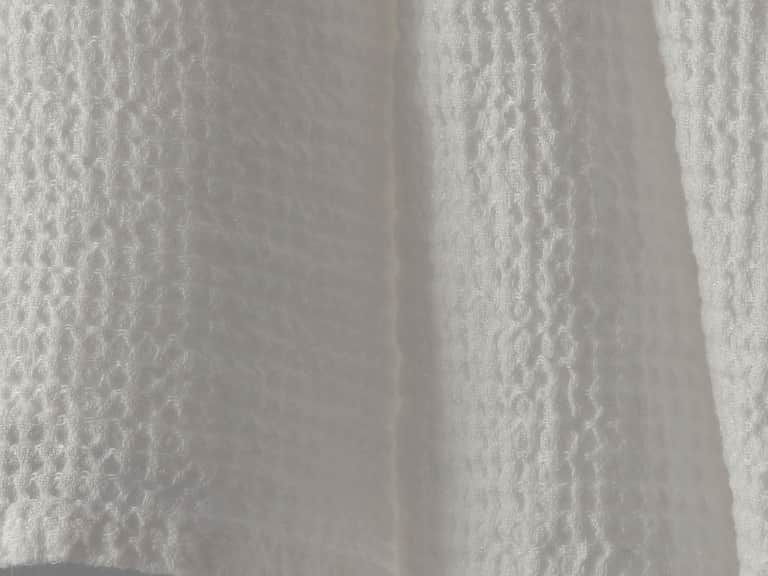
Fiber tells only part of the story. Weave determines how yarns meet and how the finished cloth responds. A relatively open construction can feel airy and may fall with a loose drape. A tighter or heavier weave can create a more stable surface, with greater visual definition and a more substantial hand. Pattern is often created through this structure as well as through color: stripes, checks, and herringbone effects can arise from the arrangement of yarns rather than from a printed surface.
For a throw, the practical effect is easy to overlook when shopping by color alone. A textile with pronounced structure may bring a room tactile interest, even when its palette is restrained. A smoother surface may layer more quietly over patterned bedding. The way the cloth folds and settles also changes the impression: a flexible weave creates soft, irregular folds, while a more structured one may hold a cleaner line over a bed or sofa.
Weight offers another useful point of comparison, although numbers should be read in context. A stated fabric weight can suggest whether a textile is relatively light or substantial, but it does not determine warmth by itself. Wool content, weave, dimensions, and the intended use all matter. If specifications are available, compare like with like: a coverlet, a blanket, and a small decorative throw may serve different roles even if their weights appear similar.
The finish changes the first touch
Finishing treatments can transform the experience of a natural fiber without changing its basic identity. Stonewashing and garment washing are examples of processes used to soften a fabric and give it a less formal appearance. A washed textile can feel more relaxed from the beginning, rather than asking the user to wait for repeated use and laundering to mellow its surface.
Finishes also affect visual character. Washed linen may show gentle variation in tone and texture, while an unwashed or more formal finish can appear sharper. Neither is inherently better. A polished, orderly bed may call for a crisp textile; a layered, lived-in room may benefit from one whose surface already carries a softer impression. The question is whether the finish suits the intended setting and the owner’s expectations.
Natural variation should likewise be distinguished from damage. In an artisanal or textured weave, small differences in yarn, color, or surface can be part of the fabric’s character. They may make two pieces feel less mechanically identical, and they can lend a textile visual warmth. But descriptions of variation are not a reason to ignore care or construction. Check seams, hems, and edges, and make sure the expected irregularity matches the maker’s explanation of the product.
Details at the edge tell a story
Fringe, selvage edges, blanket stitching, and center seams all influence the appearance and handling of a woven textile. Fringe creates a softer boundary and can emphasize the direction of the weave. A selvage finish keeps the woven edge visible and can lend a crisp, finished outline. A blanket-stitched hem offers a more pronounced border, while a center seam may help a large coverlet lie evenly.
These details are also functional. Edges receive frequent handling: they are pulled, folded, tucked, and sometimes caught beneath a pillow or cushion. A finish should be attractive, but it should also be appropriate to the textile’s intended use and the level of care the owner is prepared to give it. Fringe, for example, benefits from instructions that prevent tangling or undue stress. Decorative details are most satisfying when they remain compatible with everyday handling.
The Auburn Coverlet offers a related example of how construction details shape a linen layer. Made from 100 percent linen, it has a washed finish, a center seam, fringed ends, and selvage-finished sides. Its navy and bronze stripes sit on an ecru ground. As a coverlet rather than a throw, it is intended for the bed, but its combination of material, finish, seam, and edge treatment shows how a textile can make its construction part of its visual design.
Choose warmth for the way you live
“Warmth” is not a fixed property that can be read from a product name. It is an experience shaped by fiber, thickness, weave, room temperature, and how the textile is used. A throw resting over the shoulders may feel warmer than the same fabric spread loosely across a bed. A wool-rich blend may feel more insulating than a light linen weave, yet the weight and structure can alter the comparison.
Before choosing, think about the setting. For a living-room layer used throughout the year, a breathable textile with enough substance to drape well may be more versatile than a very heavy blanket. For a bedroom accent, color and scale may matter as much as insulation. If the primary goal is warmth, consider whether the fabric’s composition and weight support that use rather than assuming that every thick-looking textile will behave the same way.
Also consider who will use the piece and how. A frequently handled throw may need a more straightforward care routine than a delicate decorative layer. If it will be shared with children, pets, or guests, a textile that requires restrictive handling could be less practical, even if its texture is appealing. A purchase becomes more successful when its use is imagined plainly: where it will live, how often it will be washed, and whether it is meant to be touched daily or admired from a distance.
Care is part of the material choice
Care instructions are not an afterthought. They are part of the design, because laundering and drying influence how fibers and finishes hold up over time. Linen and wool blends may call for more delicate treatment than a simple cotton household textile. Always follow the label or product-specific guidance, especially when the composition includes more than one fiber.
For blended textiles, guidance may specify a low-temperature wool or hand-wash program, mild soap, and line drying. Some instructions advise unfolding the item completely before washing, avoiding an overloaded machine, and keeping chlorine bleach away from the fabric. These steps help limit unnecessary friction and stress. They also reduce the risk that a large textile will twist, bunch, or dry unevenly.
Do not assume that every linen textile can be cared for in the same way. Some product guidance permits machine washing at a moderate temperature; other pieces call for cooler, gentler handling. A wool component can change the recommended approach, and a special finish or artisanal construction may require added care. Use the instructions for the specific item rather than applying a general rule based only on the word “linen.”
Drying matters, too. Line drying is often recommended for delicate or blended fabrics. If a tumble dryer is permitted, the product’s stated temperature and drying instructions should take priority. Avoid overdrying where the care guidance warns against it. If pressing is appropriate, some linen instructions recommend steam while the fabric is slightly damp; again, check the individual product details before applying heat.
A simple comparison checklist
When comparing Libeco woven throws or similar artisanal textiles, a short checklist can keep the decision grounded in use rather than marketing language:
- Composition: Is the textile pure linen, a linen-and-wool blend, or another combination? What proportions are stated?
- Construction: Is the weave open, dense, patterned, or visibly textured? Does the structure suit the desired drape?
- Weight and dimensions: Will it work as a shoulder throw, a sofa layer, or a bed accent?
- Finish: Is it washed, stonewashed, or otherwise treated to soften the surface?
- Edges and seams: Are fringe, stitching, selvage, or seams part of the design, and do they suit the intended use?
- Care requirements: Can the textile be maintained comfortably at home, and do the instructions fit your routine?
- Provenance: Are the fiber source and place of weaving stated clearly?
This approach also guards against a common confusion: assuming that the most decorative textile is automatically the most useful. A handsome fringe or bold stripe can make a strong first impression, but comfort and longevity depend on the full combination of fiber, weave, finish, and care. A quieter design may be the better everyday choice if it fits a wider range of rooms and routines.
Texture that earns its place
The appeal of a woven throw lies in its dual nature. It is an object of touch and a piece of practical equipment: warmth when a room cools, softness against the skin, a flexible layer that can be moved wherever it is needed. Linen offers a distinctive, breathable surface; wool can add insulation and a fuller feel; their combination can balance structure and softness in ways that depend on the specific weave and proportion.
Artisanal details make that balance visible. Fringe, washed finishes, natural variation, stripes, and carefully finished edges give a textile personality without requiring elaborate decoration. But the strongest choice is not necessarily the one with the most features. It is the one whose material, scale, warmth, and care needs align with the way it will actually be used.
That is the quiet measure of a successful throw: not whether it looks at home on the first day, but whether it continues to be reached for. When texture and practicality are considered together, a woven layer can feel distinctive without becoming precious—ready for the sofa, the bed, and the ordinary moments that give a home its comfort.